Autumn Kings, Spring Footnotes: The Strange Collapse That Haunts Six Nations Contenders
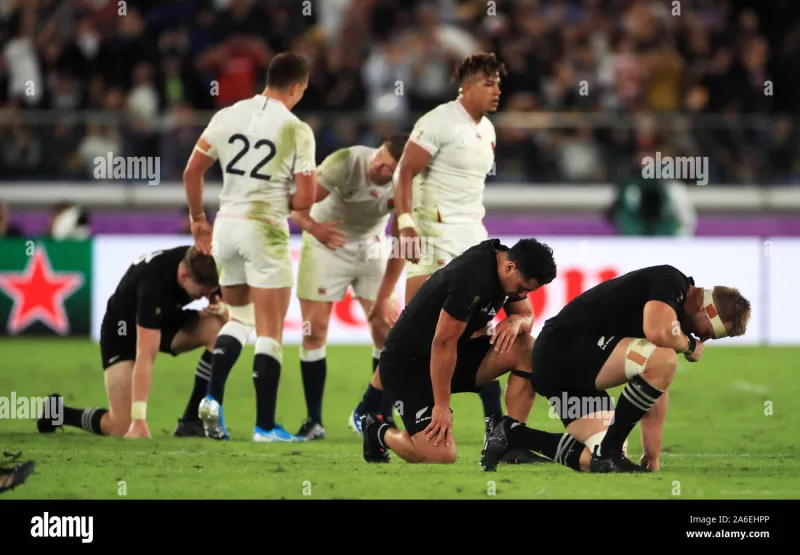
Photo: rugby player dejected head down stadium autumn winter, via c8.alamy.com
There's a particular kind of rugby heartbreak that doesn't get talked about enough. It's not the last-minute defeat, or the injury to your star fly-half, or even the penalty that drifts wide with the title on the line. It's the slower, more bewildering kind — watching a team that looked genuinely brilliant just three months earlier suddenly look like they've never met each other before.
It happens more often than it should. A nation tears through the autumn internationals — beating southern hemisphere giants, playing with fluency and confidence, generating real excitement among supporters — and then arrives at the Six Nations as one of the favourites. By the time March rolls around, they're propping up the table, the head coach is fielding awkward questions at press conferences, and pundits are scrambling to explain what went wrong.
The question worth asking is: does the autumn actually tell us anything useful at all?
The November Mirage
Autumn internationals are genuinely exciting rugby. But they operate in a fundamentally different environment to the Six Nations, and that distinction matters more than most people acknowledge.
For starters, the opposition is different. Touring sides from the southern hemisphere arrive in Europe at the end of a long season, often rotating heavily, occasionally fielding experimental combinations. A commanding win over a second-string Argentina or a tired Wallabies squad feels significant in the moment — and it is a result — but it doesn't necessarily stress-test your tactical system the way a Six Nations weekend does.
More importantly, the context is different. November Tests are relatively low-stakes for the host nation. There's no points table ticking over, no Grand Slam to protect, no title implications riding on every decision. Coaches can afford to be adventurous. They can try new combinations, run ambitious patterns, and absorb the odd loss without real consequence. Players feel liberated by that freedom. The rugby often looks better for it.
Then February arrives. The pressure is real. Every game counts. And suddenly that free-flowing side starts playing like they're terrified of making a mistake.
The Tactical Whiplash Problem
One factor that doesn't get discussed enough is the sheer tactical difference between the two competitions. Six Nations rugby, particularly in the opening rounds when the ground is heavy and defences are well-drilled and organised, demands a specific kind of patience. You have to earn territory. You have to win the contact area. You have to be comfortable grinding through phases before the space appears.
Autumn rugby — especially when you're hosting a team still adjusting to northern hemisphere conditions — can reward a more expansive approach almost immediately. Offloads come off. Wide plays create tries. The game feels open.
Teams that build their autumn identity around that expansive style sometimes struggle to shift their mindset when the Six Nations demands something more pragmatic. The instinct to keep the ball alive, which was an asset in November, becomes a liability when you're defending a narrow lead against a well-organised Irish or French defensive line in the 70th minute.
Coaches who don't explicitly manage this transition — who don't reset expectations and retool the game plan — are setting their players up to be confused when the tournament gets tight.
When Confidence Becomes Its Own Enemy
There's a psychological dimension here too, and it's a subtle one. Arriving at the Six Nations as a hyped team, off the back of a strong autumn, can actually create pressure rather than relieve it. Supporters expect continuation. Media narratives harden. The team is spoken about as a genuine Grand Slam contender before they've played a single competitive match in the tournament.
For experienced squads with strong leadership groups, that expectation can be motivating. For younger sides still establishing their identity, or teams that haven't yet won anything meaningful together, it can be paralysing.
England have experienced this cycle more than once. There have been autumns where the performance level was genuinely encouraging — structured, physical, occasionally brilliant — only for the Six Nations to expose something more fragile underneath. A narrow defeat in round two shifts the narrative. A poor performance in round three starts a panic. By round four, selection is being thrown at the problem and the coherence that was so visible in November has completely unravelled.
Scotland have felt it too. There have been campaigns where the Murrayfield faithful arrived in February genuinely believing this was the year, only to watch the team's best rugby stay stubbornly locked in the previous autumn.
The Calendar Is Part of the Problem
It's also worth acknowledging that the sheer density of the rugby calendar plays a role. Players who featured heavily in the autumn — Test matches, then club rugby through December and January, then straight into the Six Nations — are carrying significant physical and mental fatigue by the time the tournament starts. The body can be managed. Tiredness of the mind is harder to fix.
This is why squad depth matters so much, and why the teams that tend to sustain their form across both windows tend to be the ones with genuine strength throughout their 23. They can rotate in November, protect key players, and arrive at the Six Nations fresher than the teams who leaned on their first-choice XV throughout.
France's recent success has partly been built on exactly this principle — a wide pool of high-quality players that means Fabien Galthié isn't forced to burn through his best performers just to get through the autumn.
Reading the Signs Correctly
None of this means autumn form is meaningless. There are genuine signals to pick up — the quality of a team's set-piece under pressure, how well a new combination is gelling, whether a young player looks ready for consistent Test rugby. These things carry over.
But a clean sweep in November is not a guarantee of anything. It's a data point, not a prophecy. The teams and analysts who treat it as the latter tend to be the ones left explaining a Six Nations capitulation they didn't see coming.
The smarter read is to look at how a team won in the autumn, not just that they won. Did they show the ability to win ugly? Did they demonstrate defensive resilience when the game got tight? Did the coach show any willingness to adapt when the original plan wasn't working?
Those are the qualities that travel. The scorelines, in isolation, often don't.
Same Squad, Different Game
Perhaps the most honest conclusion is this: autumn and spring rugby test different things. They reward different qualities. A team perfectly suited to one environment won't automatically thrive in the other, and expecting them to is how you end up confused and disappointed come mid-March.
The Six Nations is its own beast — tighter, more attritional, more politically charged within its own bubble. The teams that understand that, and prepare specifically for it rather than simply assuming their autumn form will carry them through, are the ones still standing when the final weekend arrives.
Everybody else? They'll be wondering where it all went wrong — and looking back at a November that, in hindsight, told them very little about who they actually were.