Blood, Sweat, and Bragging Rights: The Rivalries That Made Six Nations What It Is
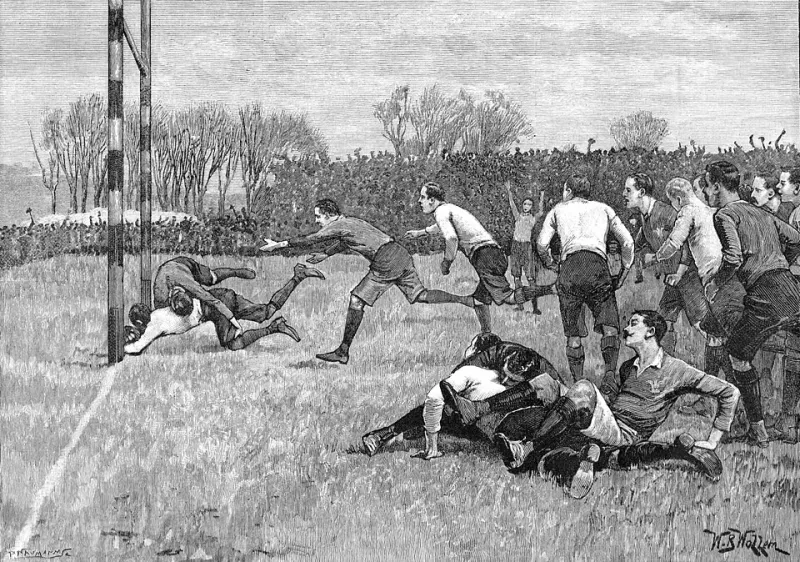
Photo: W.R. Wollem (signed), Public domain, via Wikimedia Commons
There's a particular kind of silence that falls over a dressing room before a grudge match. Not the nervous quiet before a normal fixture — something heavier, more loaded. Players who've traded elbows, captains who've swapped sharp words in post-match press conferences, coaches who've publicly dismantled each other's game plans in the press. When those teams meet, it stops being just sport.
The Six Nations has always been fertile ground for exactly that kind of intensity. Six nations, a round-robin format, and a century-plus of history mean that almost every fixture carries some kind of baggage. But a handful of these contests have transcended the tournament itself, becoming cultural touchstones that define generations of rugby supporters and, often enough, the players who take part in them.
England vs Wales: The Match Nobody Calls Friendly
If you want to understand why the England–Wales fixture matters so much, start at the terraces, not the pitch. Ask a Welsh supporter what beating England means, and they'll often struggle to explain it without grinning. It's visceral, historical, and — let's be honest — deeply political in ways that rugby commentators tend to dance around.
The rivalry stretches back to the earliest days of the Home Nations Championship, but its modern character was arguably forged in the 1970s, when Wales were the dominant force in European rugby and England were desperately trying to find their footing. Welsh legends like Gareth Edwards and JPR Williams weren't just great players — they were symbols of national pride at a time when Wales felt its identity needed defending.
Fast forward to the 2000s and the dynamic had shifted. England's 2003 World Cup triumph under Clive Woodward created a new kind of arrogance — justified, perhaps, but deeply irritating to their Celtic neighbours. The verbal jousting between coaches became as much a part of the build-up as the team selections. Warren Gatland, in his long tenure as Wales head coach, became a master of the psychological press conference, deploying the odd pointed comment with surgical precision.
Former Wales flanker Martyn Williams once described the England fixture as the one where "you'd run through a brick wall and not feel it until Monday." That says everything, really.
Scotland vs England: The Calcutta Cup and Centuries of Grievance
The Calcutta Cup is the oldest international rugby trophy still being contested — which tells you something about how long Scotland and England have been winding each other up.
What makes this rivalry particularly fascinating is how it operates on two levels simultaneously. On the pitch, it's fiercely competitive. Off it, there's a cultural subtext that no amount of diplomatic rugby-speak can fully obscure. Scottish supporters don't just want to beat England — they want to do it emphatically, in a way that silences the south for a good long while.
The 2018 edition of this fixture produced one of the great modern chapters in this story. Scotland, at Murrayfield, came agonisingly close to ending a run of poor results against their oldest rivals, only to be denied by a late Owen Farrell penalty. The sense of injustice north of the border lingered for months. It always does.
What's changed in recent years is the tactical dimension of this rivalry. Where once it was settled in the trenches — forwards smashing into forwards until someone buckled — it's increasingly won and lost in the details: lineout variations, defensive blitz patterns, how quickly a scrum-half can recycle after a breakdown. The grudge remains, but the gamesmanship has become far more sophisticated.
Ireland vs France: The Rivalry the Neutrals Love
If England–Wales is the rivalry built on historical tension, and Scotland–England on centuries of cultural friction, then Ireland–France is something slightly different: two nations who genuinely respect each other but absolutely refuse to give an inch.
France, at their best, are the most unpredictable team in the tournament. Ireland, particularly under Andy Farrell's recent tenure, are perhaps the most methodical. When these two styles collide, you tend to get something spectacular.
The 2022 and 2023 editions of this fixture were genuinely gripping — high-tempo, tactically complex, and decided by the slimmest of margins. Former Ireland captain Brian O'Driscoll, speaking on a podcast last year, described facing France as "the one where your preparation could go out the window in the first ten minutes, because they'd do something you'd never seen before."
That unpredictability is precisely what makes this rivalry so compelling to watch. Ireland come in with a plan; France occasionally tear it up with a moment of individual brilliance. Neither team has a monopoly on dominance, which means every meeting feels genuinely open.
How Rivalries Drive Performance
It's worth asking whether all this animosity actually makes players better, or just more likely to do something stupid in the heat of the moment.
The evidence, broadly, is that it helps — up to a point. Sports psychologists have long noted that meaningful competition, particularly against opponents a player has personal history with, raises intensity and focus. The risk, of course, is that it tips into recklessness. The Six Nations has seen its share of red cards in high-stakes rivalry matches, moments where emotion overrode discipline.
But the more interesting evolution is how modern players manage that emotional charge. The generation currently playing — Maro Itoje, Josh van der Flier, Antoine Dupont — grew up in a more analytically rigorous environment. They understand that losing your head is losing the match. So the psychological warfare has become subtler: a word here, a look there, a deliberate pattern of play designed to frustrate a specific opponent.
Why These Matches Still Matter
In an era of expanding rugby calendars, global tours, and year-round club competition, you might wonder whether the Six Nations rivalries retain their power. The viewing figures suggest they absolutely do. The England–Wales match consistently draws some of the largest rugby audiences in the UK, regardless of where either team sits in the table.
Because ultimately, these aren't just sporting contests. They're living history — updated every February and March with a new chapter, a new grievance, a new moment of brilliance or heartbreak that gets added to the collective memory. The players change; the stakes somehow don't.
And that, more than any trophy or title, is what makes Six Nations rugby so enduringly special.