Scores to Settle: How Six Nations Hurt Becomes the Hardest Fuel to Stop
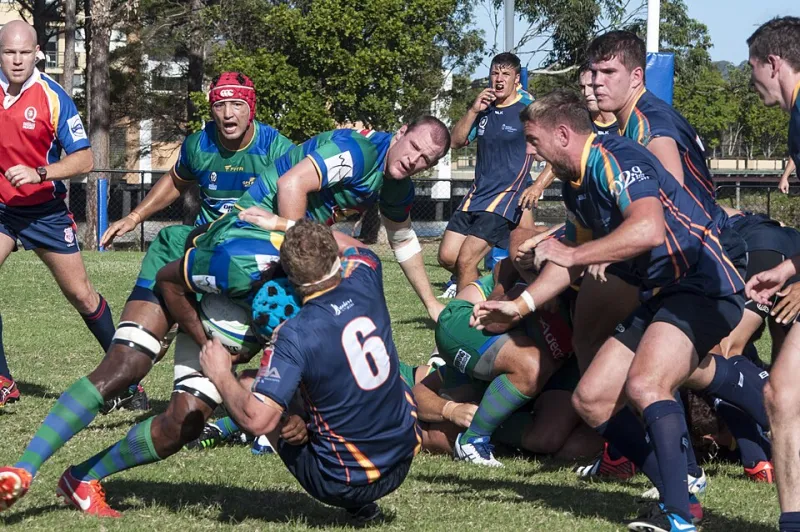
Photo: Kerrie _, CC BY-SA 2.0, via Wikimedia Commons
There's a particular kind of silence in a dressing room after a Six Nations defeat. Not the loud, chaotic grief of a World Cup exit or a Lions tour collapse — something quieter and, in many ways, more corrosive. Because the players in that room know something that makes it worse: they'll be back here next year, against the same opposition, on the same stage, carrying the same memory.
That's the unique psychological architecture of the Six Nations. Unlike knockout tournaments where a loss ends your journey, this competition resets every February and hands you the bill from twelve months prior. For some teams, that's a burden. For others, it becomes the sharpest possible weapon.
The Memory That Doesn't Fade
Ask any analyst who has worked closely with international rugby sides and they'll tell you the same thing: a Six Nations defeat to a rival doesn't get filed away neatly. It sits on the surface. Players talk about specific moments — a missed tackle, a turnover on the five-metre line, a penalty conceded in the last minutes — with a clarity that has nothing to do with video review and everything to do with the fact it kept them up at night.
"The brain doesn't store painful losses the same way it stores ordinary ones," says one performance psychologist who has consulted with Premiership and international setups. "The emotional charge attached to a high-stakes defeat actually sharpens the memory. Details get encoded more vividly. That's not always a bad thing if you can channel it properly, but it takes real work to convert that energy into something productive rather than something paralysing."
In the Six Nations, where a single result can flip a championship picture entirely, that conversion — from hurt to hunger — is often what separates the sides that bounce back from the ones that crumble under the weight of their own history.
When Underdogs Stop Being Polite About It
Some of the most compelling turnaround narratives in Six Nations history have come not from the established giants but from sides who spent years absorbing punishment before deciding enough was enough.
Ireland's evolution through the 2010s is a useful reference point. For long stretches of that decade, they carried the reputation of a side that could beat anyone on a good day but lacked the ruthlessness to do it consistently — particularly against England at Twickenham, where the occasion seemed to shrink them. The shift, when it came, wasn't just physical or tactical. Something psychological had clearly been resolved. The Grand Slam in 2018 was built on a kind of controlled anger, a refusal to be the nearly-men any longer.
Scotland's story has a similar texture, even if the trophy cabinet tells a more frustrating tale. Their wins over England at Murrayfield in recent years have had an almost personal quality to them — not just relief, but something that felt like reclamation. These weren't performances built on inspiration alone. They were built on memory.
The Tactical Side of Grudge Matches
Here's where it gets genuinely interesting from an analytical perspective. When a coaching staff knows their players are carrying emotional weight into a rematch, the preparation shifts in subtle but significant ways.
First, there's the film work. In a standard pre-match analysis cycle, coaches might spend the majority of their review time on the upcoming opposition's recent form — the last three or four matches. But before a revenge fixture, analysts will often go back further. They'll pull up the specific defeat, watch it again with the squad, and frame it not as a wound to be reopened but as a blueprint for what needs to change. The loss becomes a working document.
Second, there's the physical preparation. Teams who felt they were physically dominated in a previous encounter will often adjust their conditioning block in the weeks before the rematch. You'll see forwards who got outmuscled in a breakdown battle arriving at the next fixture with a particular edge in contact training — it's not coincidental.
Third — and this is the element that's hardest to quantify — there's the shift in risk appetite. A team playing with something to prove will often make bolder decisions at critical moments. They'll go for the corner flag when convention says kick for points. They'll attempt the lineout steal under pressure. The psychological context changes the decision-making calculus in real time.
When Revenge Becomes a Trap
It would be tidy to say that motivated sides always convert hurt into triumph. But the Six Nations has produced just as many examples of the reverse — teams so consumed by the desire to right a wrong that they overthink, overtrain, and ultimately self-destruct.
Wales have experienced this cycle more than once. Capable of producing genuinely brilliant performances against England and France in the aftermath of heavy defeats, they've also occasionally arrived at revenge fixtures so tightly wound that the pressure implodes from within. The difference between channelled revenge and suffocating obsession is narrow, and coaching staff walk that line carefully.
England, too, have had their moments of getting the psychology wrong. The 2020 Six Nations offered a telling case study — a side that entered the tournament as heavy favourites, carrying the confidence of an autumn series, and found that expectation rather than hunger had quietly replaced the edge that had driven them all the way to the World Cup final.
Revenge, it turns out, is most effective when the side seeking it still feels like the underdog. Once you become the favourite, the emotional dynamic flips, and the opposition are suddenly the ones with something to prove.
The Coaches Who Make It Personal
It's not just players who carry these scores. Coaches, perhaps even more so, tend to hold defeats close. They're the ones who have to stand in front of cameras and offer measured, professional reflections while internally cataloguing every decision they'd take differently. That private reckoning often drives the most forensic preparation imaginable.
Warren Gatland built much of his Wales tenure on this kind of controlled obsession — particularly in fixtures against England. His tactical adjustments between meetings were never random; they were direct responses to what had gone wrong previously. Similarly, Andy Farrell's Ireland have shown a capacity to study a defeat, absorb its lessons, and return to the same fixture transformed.
The great Six Nations coaches aren't just tacticians. They're archivists of pain, and they know exactly when to open the file.
Why This Makes the Six Nations Unmissable
For those of us watching from the sofa or the stands, the revenge factor is part of what makes this competition so compelling year after year. There's a continuity to the Six Nations that other tournaments simply can't replicate — a rolling narrative where nothing is ever fully resolved, where every result carries forward into the next chapter.
When Scotland line up against England at Murrayfield, or when France host Ireland in Paris, the match you're watching isn't just about the eighty minutes in front of you. It's about the eighty minutes from twelve months ago, and the ones before that, and the ones before that. The scoreboard resets. The memory doesn't.
And that's what makes the Six Nations, year in and year out, the most psychologically rich rugby competition on the planet.


