Bookmakers' Darlings, Tournament Disasters: The Strange Fate of Six Nations Favourites
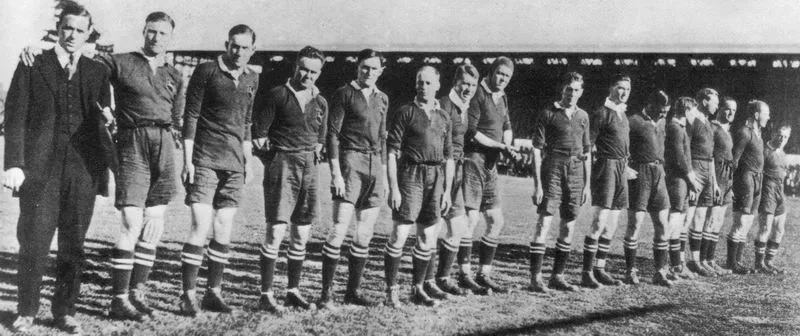
Photo: Unknown authorUnknown author, Public domain, via Wikimedia Commons
There's a particular kind of suffering reserved for the team that walks into a Six Nations campaign with the weight of expectation on its shoulders. The bookies love them. The pundits are filing glowing previews. The fan forums are already planning the victory parade. And then, somewhere around round three, it all starts to unravel in the most public way imaginable.
This isn't a coincidence. It's practically a tradition.
The Pressure Cooker That Is Round One
When a team is installed as favourite before a ball has been kicked, the psychological burden kicks in immediately. Every training session, every press conference, every selection decision gets filtered through the lens of expectation. Players who thrive under the radar suddenly find themselves fielding questions about Grand Slams before they've even faced their first scrum.
Sport psychologists have long noted that perceived pressure from external sources — media coverage, public expectation, sponsor visibility — can subtly shift a player's focus from process to outcome. Instead of playing the game in front of them, athletes begin managing an imaginary scoreline that exists only in the press. In the Six Nations, where the margin between winning and losing can be a single penalty or a refereeing call, that mental drift is devastating.
England's 2020 campaign is a decent case study. Coming off a World Cup final appearance, Eddie Jones's side were many people's pick to dominate. They started well enough but stumbled at crucial moments, ultimately finishing second. The talent was there. The preparation was thorough. But the tournament has a way of exposing the gap between expectation and execution.
How Opponents Flip the Script
Here's something the favourites always seem to underestimate: everyone else in the tournament has spent months preparing specifically to beat them. When you're the team to beat, you don't just face opponents — you face opponents who've built their entire tactical game plan around dismantling you.
The so-called "underdog blueprint" is a well-worn tactic in the Six Nations. Coaches of lower-ranked sides will study the favourite's patterns obsessively. They'll identify the trigger plays, the preferred attacking channels, the lineout variations. They'll design defensive systems that neutralise the favourite's most dangerous ball carriers. And crucially, they'll have nothing to lose.
Ireland's historic win over New Zealand in 2018 wasn't Six Nations, but it illustrated the principle perfectly — a team with genuine tactical intelligence, playing without fear, can dismantle even the most formidable opposition. That same dynamic plays out every Six Nations. The underdog is liberated by low expectations. The favourite is shackled by them.
The Media Amplifier Effect
British sports media has a well-documented relationship with building teams up before knocking them down, and rugby is no exception. When a squad is anointed as the tournament's best hope, the coverage intensifies in ways that genuinely affect performance environments.
Team hotels become harder to navigate. Social media noise increases. Players who might otherwise stay under the radar are suddenly subject to scrutiny over their form, their fitness, their personal lives. The coaching staff have to manage not just tactics but an entire information ecosystem around the squad.
There's also the internal pressure this creates between squad members. When the spotlight is brightest, competition for starting spots becomes more fraught. Established partnerships can fracture. A fly-half who's been playing with freedom all season starts second-guessing himself in front of a packed Twickenham. It's subtle, but it's real.
When History Becomes a Millstone
Some nations carry the additional burden of historical expectation. England, France, and Ireland have all experienced periods where the weight of previous success — or the desperate desire to end a trophy drought — has warped their tournament approach.
France, in particular, have a fascinating relationship with favouritism. They've arrived at multiple tournaments as genuine contenders, only to produce results that defied both logic and talent level. The 2022 Grand Slam suggested they'd finally shed that tendency, but even then, it came after years of being fancied and falling short. The French rugby psyche is complex and, frankly, endlessly compelling to watch.
Scotland, meanwhile, have occasionally benefited from being perennial dark horses. Without the pressure of genuine favouritism, they've produced some of their best Six Nations rugby in recent memory — playing with an attacking freedom that more burdened squads simply can't access.
So Can Favourites Actually Win?
Of course they can, and sometimes they do. Wales under Warren Gatland built a culture that seemed to thrive on expectation. Ireland's back-to-back Grand Slams in 2023 and 2024 showed that a squad with the right mental architecture can convert favourite status into fuel rather than dead weight.
The difference, more often than not, comes down to internal culture. Squads that can insulate themselves from external noise, maintain their process focus, and treat every match as its own isolated challenge — regardless of what the papers are saying — have the best chance of converting pre-tournament billing into actual silverware.
But those squads are rarer than you'd think. And until the next one comes along, the Six Nations will keep doing what it does best: humbling the anointed and rewarding the overlooked.
That's not a bug in the tournament. It's the feature that keeps us all coming back.