Off the Bench and Into the History Books: The Impact Players Who Quietly Won Six Nations Campaigns
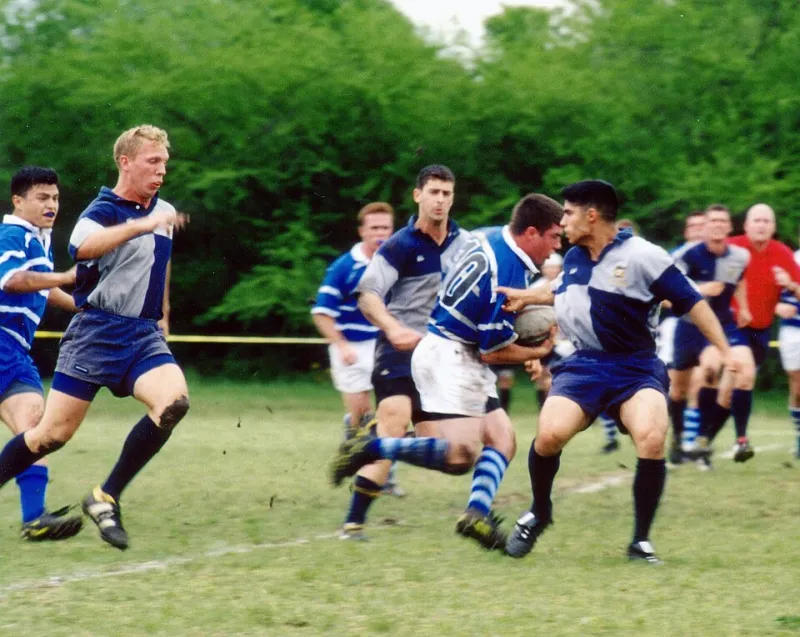
Photo: U.S. Air Force photo by Bob Jensen), Public domain, via Wikimedia Commons
There's a moment that happens in every Six Nations match, usually somewhere around the 55th minute, that doesn't get nearly enough attention. A coach leans over to a staff member, makes a decision, and a player strips off a bib and starts loosening up on the touchline. The crowd barely notices. The commentary team might throw in a cursory mention. But what happens next can — and regularly does — completely change the outcome of a match.
We love a starting XV narrative. The team sheet drops on a Thursday, social media erupts, pundits argue about selection for two days straight, and then 80 minutes of rugby later we crown the heroes and mourn the failures. The fifteen who start get the scrutiny, the praise, and the criticism. The eight sitting on the bench? They're an afterthought — until they're not.
The Tactical Bench Is a Modern Invention
It wasn't always this way. For much of rugby union's history, replacements were purely functional. Someone got injured, someone else came on. The idea that you might deliberately design your bench around specific tactical problems — that you'd plan to introduce a ball-carrying prop in the final quarter to exploit a tiring opposition front row — is a relatively recent development in international coaching.
Now, though, elite coaches treat the bench as a second wave of attack. Ireland's Andy Farrell has spoken openly about wanting his replacements to hit the pitch with more energy than the tired players they're replacing, essentially aiming for a seamless power surge in the closing stages. England's coaching staff have, at various points, structured their selection so that a particular replacement hooker or flanker addresses a very specific defensive vulnerability they've identified in the opposition. It's chess, not draughts.
The Six Nations format — six rounds of high-intensity international rugby in a compressed window — makes bench depth even more critical than in, say, a one-off Test match. Fatigue accumulates across the tournament. Bodies break down. A squad that looks one-dimensional in January can find itself desperately exposed by the time March rolls around.
The Mental Weight of Being the 'Finisher'
Here's something that doesn't get discussed enough: being a bench player at international level is genuinely hard on the mind. You train at the same intensity as the starting XV all week. You prepare the same way, study the same footage, go through the same warm-up. And then you sit and watch — sometimes for an hour — before being asked to deliver the moment the match is most finely balanced.
Former players have described it as one of the more psychologically demanding roles in team sport. There's no easing into the game. No first five minutes to find your feet and settle your nerves. You come on when the pressure is highest, the bodies are most fatigued, and the margin for error is smallest. And if it goes wrong, the narrative is almost always that the team lost despite the starting XV's best efforts. The bench rarely gets the blame, but they don't get the credit either.
Coaches who manage this well — who keep their replacements mentally sharp and emotionally invested across a full tournament — have a genuine advantage. It's a culture thing as much as a selection thing.
Case Study: When the Bench Wins the Match
Cast your mind back to some of the more dramatic Six Nations finishes over the past decade and you'll start noticing a pattern. The player who scores the decisive try, or the one who suddenly shifts the momentum with a barnstorming carry, often has a number between 16 and 23 on their back.
Wales, during their most successful Six Nations periods, were masters of this. Their ability to introduce physical carriers off the bench — players who could exploit the spaces created by an increasingly fatigued opposition defence — became almost a signature move. It wasn't accidental. It was designed.
France have leaned into bench power in a different way, using their replacement scrum-halves to inject tempo when the game opens up, and their loosehead replacements to target opposing scrums that have been grinding for 60 minutes and are starting to creak.
Scotland, often working with a thinner talent pool than their rivals, have had to be particularly clever. Their best campaigns have typically featured bench players who were versatile enough to cover multiple positions, giving the coaches flexibility to react to what the match was actually demanding rather than what they'd predicted it would demand.
The Specialist Impact Player
Then there's a specific breed of rugby player who has built an entire international career around being brilliant off the bench. Not good enough to start consistently — or at least, in competition with someone who edges them for the starting spot — but absolutely invaluable as a match-changer.
These players are fascinating. They've had to make peace with a role that offers less visibility and fewer personal highlights, while still performing when the stakes are at their absolute highest. The good ones develop an almost predatory instinct for the game — they've watched enough of it from the bench to read it brilliantly, and they arrive on the pitch with a clarity of purpose that sometimes eludes players who've been in the thick of it since the first whistle.
In the Six Nations context, where one match can be the difference between a Grand Slam and a mid-table finish, having two or three of these specialists in your squad isn't a luxury. It's a necessity.
Giving Credit Where It's Due
Next time you're watching a Six Nations match — whether you're in the stadium or on the sofa — try something different. Keep half an eye on the bench. Watch how the coaches react to what's unfolding on the pitch. Notice when the replacements start warming up and think about why, at that particular moment, that particular player.
Because the decision made in the 52nd minute, the player who comes on in the 58th, and the carry they make in the 67th — that chain of events shapes more Six Nations results than the starting XV decisions that dominate Thursday's back pages.
The unsung heroes aren't invisible. We've just been looking in the wrong direction.