Eighty Thousand Voices: Are Referees Losing the Battle Against Crowd Pressure in the Six Nations?

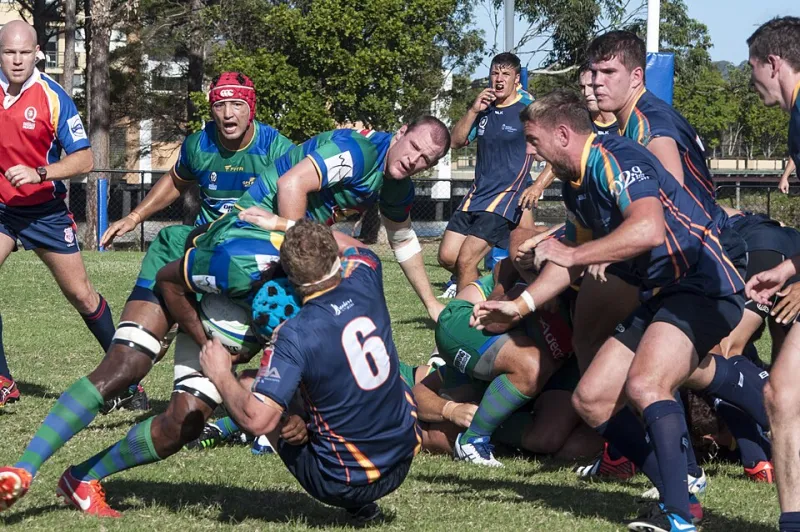
Photo by Photo by Stefan Lehner on Unsplash on Unsplash
There's a moment that happens in almost every Six Nations match. The home side's flanker arrives at a breakdown, the ball is contested, and the referee makes a split-second call. In a neutral venue, with only the sound of boots on turf, that decision might go either way. But at the Principality Stadium with the roof closed and 74,000 Welsh voices shaking the steel, or at a packed Murrayfield with 67,000 Scots in full throat? The dynamics shift in ways that are harder to measure than a penalty count — but no less real.
This isn't a conspiracy theory. It's a question that acoustic researchers, sports psychologists, and former match officials have been quietly grappling with for years. And in the compressed, high-stakes environment of the Six Nations, where the margin between glory and disappointment is razor-thin, it matters enormously.
The Science of Sound and Split-Second Judgement
Human decision-making under noise stress is well-documented. Studies from sports psychology departments across UK universities have consistently shown that elevated ambient noise — anything above 85 decibels — measurably degrades fine motor coordination, shortens attentional focus, and increases the likelihood of what researchers call "heuristic shortcuts": essentially, gut reactions that bypass careful analysis.
For a rugby referee, those gut reactions are happening dozens of times per match. Was that a knock-on or did the ball travel forward off the defender's chest? Was the tackler's arm around the neck, or was that a legitimate shoulder? Did the scrum collapse because of illegal binding, or did the loosehead simply slip?
None of these calls come with a pause button. And when the noise in the stadium surges to the kind of levels recorded at Twickenham, the Aviva Stadium in Dublin, or the Stade de France — regularly exceeding 100 decibels during pivotal moments — the cognitive load on the person in the middle becomes extraordinary.
Dr. Sarah Connolly, a sports psychologist who has worked with elite officiating programmes in the UK, puts it plainly: "Noise doesn't make referees dishonest. It makes them human. When your auditory processing is overwhelmed, your brain leans harder on pattern recognition and social cues. In a stadium where 70,000 people are gasping or groaning, those social cues are pointing in one direction."
The Home Advantage Numbers
The statistical picture is uncomfortable reading for anyone who believes Six Nations officiating is entirely neutral. Across the past decade of tournament rugby, home sides have consistently received more penalties in their favour than visiting teams — a gap that persists even when controlling for possession, territory, and playing style.
Now, correlation isn't causation. Home teams often play with more ambition, invite more contact, and benefit from crowd-driven momentum that genuinely affects how the game unfolds. But the penalty differential at breakdown — arguably the most subjective officiating zone in rugby — is notably wider at home than away, and that pattern holds across all six nations.
Former international referee Nigel Owens has spoken openly about the psychological weight of officiating in front of hostile crowds. "You're aware of the noise," he admitted in a 2022 interview. "You'd be lying if you said you weren't. The professional in you fights against it. But the noise is always there."
That honesty is refreshing. It also opens a door that World Rugby and the Six Nations organisers may prefer to keep firmly shut.
Acoustics as a Home Weapon
Not all stadiums are created equal when it comes to sonic intimidation. The Principality Stadium, with its retractable roof that can be fully closed during winter Six Nations fixtures, creates an acoustic environment that visiting players and officials describe as genuinely disorienting. Sound doesn't escape — it bounces, amplifies, and compounds.
Murrayfield's open bowl design funnels noise from the terraces directly toward the pitch. Twickenham's newer stands have dramatically improved its acoustic intensity compared to a decade ago. Even the Stade de France, sometimes criticised for a flat atmosphere, becomes a wall of sound when France are in full flow and the crowd senses a big moment.
Stadium architects have long understood that acoustic design influences the fan experience. What's less openly discussed is whether it also influences the officials. When a crowd erupts in protest at a potential penalty not given, that eruption is a form of social pressure — and social pressure, however unconsciously, leaves fingerprints on decision-making.
Could Technology Actually Help?
The most obvious technological intervention is already partially in place: the TMO system. Referring decisions upstairs removes at least some calls from the raw pressure of the stadium moment. But the TMO process is slow, limited in scope, and — as anyone who's watched a Six Nations match knows — capable of generating its own controversies.
More intriguing is the idea of enhanced communication systems that effectively isolate the referee from crowd noise during key decision moments. Some researchers have proposed earpiece technology that uses active noise cancellation to create a brief "acoustic bubble" when the referee is about to make a significant call — filtering out the roar and allowing clearer internal processing.
It sounds futuristic. It probably is, for now. But the same people who once laughed at the idea of a television match official are now arguing whether the TMO should have a wider remit. Technology has a habit of arriving in rugby faster than the traditionalists expect.
There's also a simpler, lower-tech proposal: standardised pre-match briefings that explicitly address crowd pressure, giving referees psychological anchoring techniques to deploy when noise levels spike. Some officiating programmes already include elements of this. The question is whether it's being taken seriously enough at the elite level.
The Conversation Nobody Wants to Have
Here's the awkward truth at the heart of this issue. Six Nations rugby is partly sold on the ferocity of its atmospheres. The roar of Cardiff, the thunder of Murrayfield, the cauldron of the Stade de France — these aren't incidental features of the tournament. They're central to its identity, its broadcast appeal, and the emotional experience that makes Six Nations weekends feel unlike anything else in British and European sport.
Asking whether that atmosphere compromises officiating integrity puts organisers in an impossible position. Acknowledge it too loudly, and you're undermining faith in the competition. Ignore it entirely, and you're leaving a genuine sporting fairness issue unaddressed.
The honest middle ground is research — proper, independent, longitudinal research into how noise environments affect officiating outcomes across the tournament, conducted transparently and with the cooperation of World Rugby. That research would be uncomfortable. It might produce findings that nobody in the game particularly wants to publicise.
But if Six Nations rugby is serious about the quality of its officiating — and it should be, given that decisions at this level shape careers, campaigns, and entire national rugby narratives — then the question of what 80,000 voices actually do to the person in the middle deserves a proper, honest answer.
The crowd will always roar. The referee will always be human. The gap between those two facts is where the problem lives.