Lucky Socks, Cold Showers, and the Rituals That Rugby Players Swear Actually Work
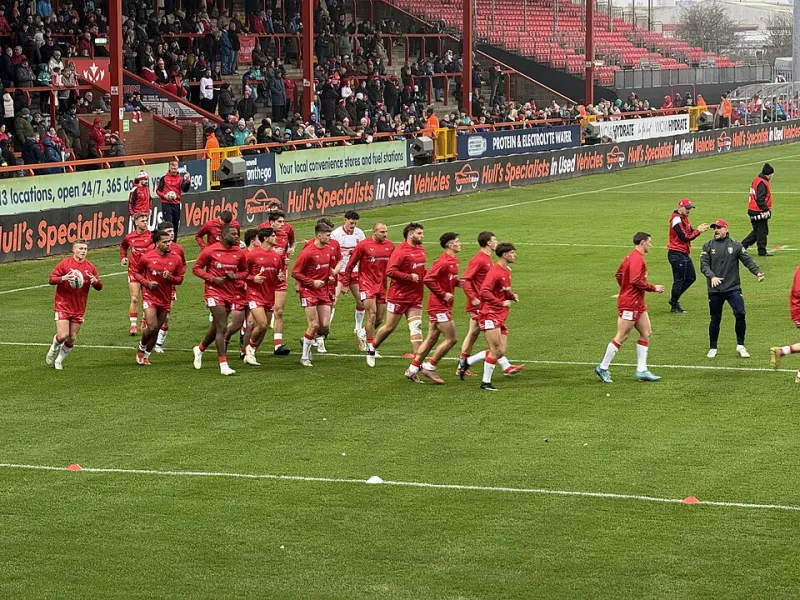
Photo: Hullian111, CC BY-SA 4.0, via Wikimedia Commons
There's a moment, roughly 90 minutes before kick-off, when a Six Nations changing room becomes something close to a sacred space. The jerseys are hung. The boots are laid out. And somewhere in the corner, a flanker is eating the exact same meal he's eaten before every match since he was seventeen — not because he's hungry, but because eating anything else feels like tempting fate.
Superstition in sport is nothing new. But rugby, perhaps more than most, seems to attract a particular kind of ritualistic thinking. Maybe it's the physical brutality of the game, the sheer amount of things that can go wrong in eighty minutes. Or maybe it's the culture — tight-knit squads, long camp weeks, the kind of closeness that breeds shared habits and collective mythology. Whatever the reason, Six Nations rugby is absolutely riddled with pre-match rituals, and the players who follow them will tell you, with complete sincerity, that they matter.
The Classics: Meals, Music, and the Same Pair of Socks
Ask any ex-international about their pre-match routine and you'll usually get one of three things: a very specific meal, a very specific playlist, or an item of clothing that should, by rights, have been binned years ago.
The meal thing is almost universal. Pasta is the safe bet — easy on the stomach, reliable on the energy front — but it's rarely just pasta. It's that pasta. The one from the same restaurant, or cooked the same way, or eaten at the same time. Former Scotland scrum-half Chris Cusiter once mentioned in an interview that his pre-match routine was so locked in that any deviation — a delayed team bus, a hotel kitchen running late — would genuinely throw him. Not because he was superstitious in a mystical sense, but because routine was how he signalled to his brain that it was time to perform.
That distinction matters. Sports psychologists are fairly clear on this: what looks like superstition from the outside is often something much more functional on the inside. It's not about luck. It's about control.
The Psychology Behind the Ritual
Pre-performance routines are well-documented in sports psychology literature. The basic idea is this: in high-pressure environments, the brain benefits from anchors — repeated sequences of behaviour that act as a kind of mental shortcut to a focused, composed state. When you do the same things in the same order, you're essentially telling your nervous system: we've been here before, we know how this goes, we're ready.
For Six Nations players, the pressure is about as intense as it gets in club or international rugby. The crowds are enormous, the stakes are national, and the margins between winning and losing can come down to a single decision in the final ten minutes. In that context, anything that steadies the mind is going to feel invaluable — whether it's a lucky charm or a cold shower at exactly 11am.
England's players have spoken openly over the years about the team's structured matchday schedules, where even the timing of warm-up sequences is carefully controlled. Wales have long been associated with the emotional power of the pre-match huddle and the weight of the anthem. Ireland's rise under Joe Schmidt was partly attributed to a culture of ruthless preparation — routines so embedded that the players could execute under pressure almost on autopilot.
None of that is superstition in the traditional sense. But the line between routine and ritual is blurry, and most players will admit to crossing it.
When It Gets Weird
And then there are the genuinely eccentric ones.
Rugby has a long oral tradition of bizarre pre-match habits passed down through squads. There are stories of players who refuse to be the last one out of the changing room, and others who insist on being exactly that. Boots that haven't been washed since a winning streak began. A specific song that has to play at a specific volume on the team bus. One former international — who shall remain nameless, though he played for a northern hemisphere nation in the early 2010s — reportedly wore the same unwashed training shirt under his match jersey for an entire Six Nations campaign because he'd been wearing it when his team won their first game.
These aren't performance tools in any clinical sense. They're comfort objects. And there's no shame in that. The pressure of a Six Nations campaign is relentless — six weeks of media scrutiny, public expectation, and the knowledge that one bad afternoon can define how an entire nation remembers your year. If a tatty old shirt makes you feel better walking out at the Principality Stadium, you wear the shirt.
Do Consistent Routines Actually Produce Better Results?
Here's where it gets interesting from an analytical perspective. If you look at the Six Nations teams that have dominated over the past two decades — Ireland in the Schmidt era, France's current vintage, England during their 2016-2020 peak — one consistent thread is the sense of a deeply embedded team culture. Not just tactics, but habits. Ways of doing things that don't change regardless of the opposition or the occasion.
It's hard to isolate routine as a causal factor — there are too many variables in rugby to say "they won because they had better pre-match rituals." But there's a reasonable argument that consistent routines are a symptom of something that does produce results: psychological stability. Teams that know exactly what they're doing in the hours before kick-off tend to be teams that know exactly what they're doing at minute seventy with the score level.
Conversely, disrupted routines can be genuinely destabilising. Away fixtures in the Six Nations are notorious for this — unfamiliar hotels, different pitches, hostile atmospheres. The teams that travel well tend to be those who've built routines portable enough to survive the disruption.
The Anthem as Ritual
It's worth pausing on one pre-match ritual that's shared by every team in the tournament: the national anthem. In the Six Nations, this isn't a formality. It's a collective act of psychological preparation, and the difference between teams that lean into it and those that don't is visible from the stands.
Watch Wales sing Hen Wlad Fy Nhadau before a home game at the Principality and you're watching eighty thousand people participate in the same ritual as the players. The sound is overwhelming. The effect on a visiting team — especially one experiencing it for the first time — is not nothing. It's a ritual that belongs to everyone in that stadium simultaneously, and it sets the emotional tone for everything that follows.
The Bottom Line
So do pre-match rituals actually shape Six Nations outcomes? Probably not in any direct, measurable sense. No lucky sock has ever won a lineout. No cold shower has ever stopped a French backline.
But the confidence, focus, and psychological readiness that rituals help build? That absolutely influences what happens when the whistle goes. Rugby is played in the mind as much as the body, and anything that gets a player to the right mental place before kick-off is doing real, legitimate work.
The unwritten script that plays out in changing rooms across Europe every Six Nations weekend might look like nonsense from the outside. From the inside, it might be the most important preparation of all.