Playing a Different Game: How the Women's Six Nations Is Changing Rugby From the Inside Out

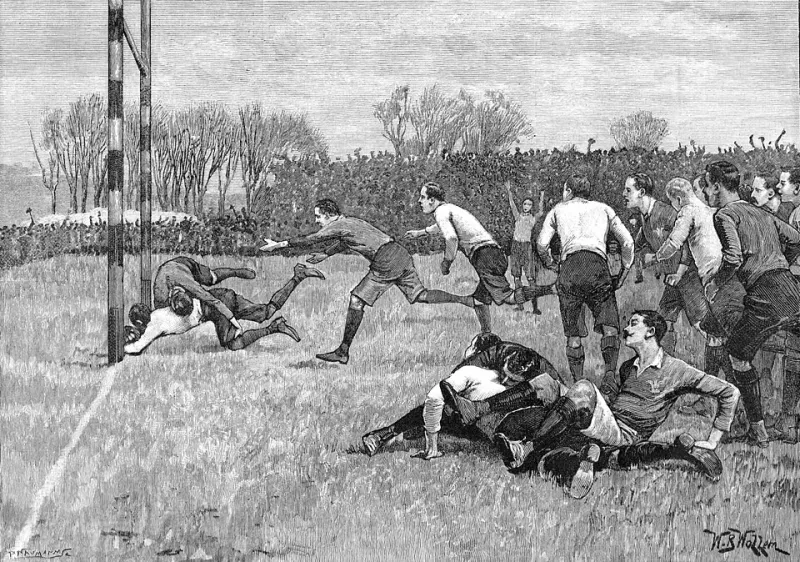
Photo: Bearas, CC BY-SA 4.0, via Wikimedia Commons
For years, the Women's Six Nations existed in the footnotes of rugby coverage — a brief mention after the main event, a highlights package tucked away at an inconvenient broadcast slot. That's changing, and changing fast. But what's really striking isn't just the growing audience or the improved production values. It's that the women's game has developed into something tactically and culturally distinct from its male counterpart, and in some areas, it's actually ahead of the curve.
A Faster, More Expansive Game
Watch a Women's Six Nations match alongside a men's fixture and the contrast is immediately apparent. The women's game tends to move at a higher tempo in open play. Defences reset differently, and with physical mismatches less extreme across the field, the ball moves wider, more quickly, and with more creative intent from deeper positions.
This isn't simply a function of physicality — it reflects deliberate tactical choices made by coaches who've built systems around ball movement rather than forward dominance. England Women, under various coaching setups, have developed a back-line game that prioritises width and pace. France's women have long used their natural athleticism to play an expansive, almost basketball-like style in broken play. These aren't adaptations of the men's game — they're original approaches that have evolved independently.
Interestingly, some analysts have noted that certain attacking patterns now visible in men's international rugby — particularly around quick recycling and wide channel exploitation — echo structures that women's coaches were running several years earlier. The influence isn't always credited, but it's there.
Injury Patterns and What They Reveal
The medical and sports science data coming out of the women's game is genuinely fascinating, and it's reshaping how rugby as a whole thinks about player welfare.
Female players experience different injury profiles to their male counterparts — higher rates of ACL injuries, for instance, are a documented concern across women's sport generally, and rugby is no exception. The response from the Women's Six Nations ecosystem has been to invest heavily in injury prevention programmes, tailored conditioning, and movement screening that goes beyond what many male squads were doing at the same stage of professional development.
This has produced a body of knowledge that's now filtering back into the men's game. Strength and conditioning coaches who've worked across both programmes speak about the transferable insights — particularly around load management and lower-limb conditioning — that women's rugby has contributed to the broader sport. It's a knowledge exchange that rarely gets acknowledged publicly, but the impact is real.
Rivalries With Their Own Stories
The men's Six Nations has centuries of history to draw on — England vs France carries the weight of ancient grievances, Scotland vs England is practically a national event. The women's tournament is younger, but it's building its own rivalry mythology at remarkable speed.
England and France have developed one of the most compelling head-to-heads in women's rugby. Their meetings carry genuine needle — tactical battles between two of the most professionally resourced programmes in the world, with contrasting philosophies that make for consistently absorbing matches. England's structured, defensively disciplined approach against France's flair and physicality has produced some of the tournament's most memorable contests.
Ireland and Scotland, meanwhile, are building something that feels culturally significant in women's sport more broadly. Both nations have made substantial strides in professionalisation, and the passion their matches generate — particularly in Dublin and Edinburgh — speaks to a fanbase that's grown organically, without the marketing machinery that supports the men's game.
Wales and Italy are carving out their own story too, often competing for the same mid-table positions with a ferocity that the standings don't fully capture. These are teams fighting for identity as much as results.
The Professionalisation Question
One of the most significant differences between the tournaments right now is the uneven pace of professionalisation across the women's competition. England's Red Roses have been full-time professional athletes for several years. Other nations are still navigating the transition from semi-professional or amateur setups, which creates genuine competitive imbalances that the men's game doesn't face in quite the same way.
This is both a challenge and an opportunity. The nations catching up are doing so with extraordinary enthusiasm, and the rate of improvement in countries like Ireland and Scotland has been dramatic. There's a genuine sense that the women's Six Nations is in the middle of its own defining era — a period that future historians of the sport will look back on as the moment the game truly transformed.
For fans in the UK, this is particularly worth engaging with. We're watching the foundation myths being written in real time. The players who are competing now will be the names referenced in think-pieces twenty years hence.
Why It Matters Beyond Rugby
The Women's Six Nations isn't just changing rugby — it's part of a broader shift in how British sports culture relates to women's sport. The Lionesses effect, the growth of the Women's Super League, the visibility of British women at major athletics events — these have created an audience that's genuinely hungry for high-quality women's sport and willing to engage with it on its own terms.
Rugby is well-placed to capitalise on that shift, but only if it stops treating the women's tournament as a secondary event and starts recognising it as the distinct, genuinely compelling competition it's become.
The players are doing their part. The coaches are doing their part. Now it's time for the coverage, the broadcast deals, and the fan culture to catch up. Here at Six Nations Live, we're already watching — and what we're seeing is a game that's not just growing, but genuinely innovating.