Stadium as Weapon: The Decibel Science Behind Six Nations Home Advantage
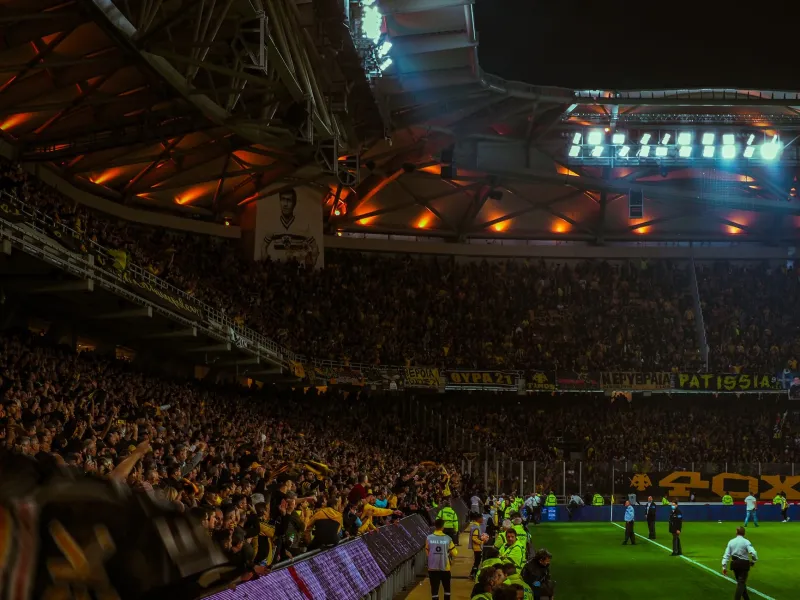
There's a moment in almost every Six Nations home match — usually somewhere around the 60-minute mark, when the game is tight and the crowd can smell blood — where the noise stops being background and starts being something else entirely. Something almost physical. A wall of sound that visiting players have to push through just to hear their own thoughts.
We talk about home advantage all the time in rugby. We nod at it, accept it as part of the furniture, and move on. But there's an actual science buried underneath the romance, and it's worth spending some time with it — because the numbers are genuinely startling.
What the Decibels Actually Tell Us
Murrayfield, during a Scotland vs England fixture, has been measured at peaks above 110 decibels. To put that in context, that's roughly equivalent to standing close to a chainsaw, or being in the front row at a rock concert. The Aviva Stadium in Dublin — a cauldron on a good day — regularly nudges past 100dB when Ireland are rolling. Even Twickenham, which sometimes gets unfairly written off as a corporate crowd, can generate extraordinary noise when England are surging in the final quarter.
Human speech in normal conversation sits around 60dB. Shouted communication on a rugby pitch, even at close range, struggles to cut through much beyond 85dB. Do the maths, and you start to understand why visiting scrum-halves look like they're screaming into a hurricane during a Six Nations away fixture.
The issue isn't just volume, though. It's frequency. Crowd noise in a packed stadium creates what acoustic engineers call a broadband noise environment — essentially, sound spread across a wide range of frequencies simultaneously. That's exactly the kind of noise that makes selective listening almost impossible. Your brain can't isolate a teammate's voice because there's no clean frequency gap for it to live in.
The Communication Breakdown Nobody Talks About
Lineout calls. Defensive alignments. Backline moves. All of these depend on verbal communication. And in a modern Six Nations match, that communication is happening constantly — not just at set pieces, but throughout the flowing phases that define how teams like Ireland and France play the game.
Former Scotland hooker Ross Ford spoke candidly in an interview a few years back about the genuine difficulty of calling lineouts at Murrayfield during a packed home fixture — not as the visiting team, but as Scotland. If your own crowd is disrupting your own calls, imagine what it's doing to the opposition trying to decode them.
Visiting scrum-halves and fly-halves — the quarterbacks of rugby union — are arguably the most affected. They need to process information quickly, communicate decisions instantly, and read the defensive line in front of them. Strip away reliable verbal communication and you're asking them to make high-stakes decisions in a kind of sensory fog. Mistakes creep in. Hesitation creeps in. And at Test level, hesitation is the difference between a clean break and a turnover.
Architecture Plays Its Part
It's not just the fans making noise — it's the buildings themselves. Stadium architecture has a profound effect on how sound behaves, and the Six Nations venues are a fascinating study in contrast.
Murrayfield's partially enclosed bowl shape means crowd noise gets trapped and amplified back towards the pitch rather than dissipating upward. The Aviva's design, completed during its 2010 redevelopment, creates a similar effect — the roof structure reflects sound downward, concentrating it at pitch level rather than letting it bleed into the Dublin sky.
Twickenham, by contrast, is a more open structure in certain configurations, which is partly why it can feel acoustically flatter than its capacity suggests. That said, when the East Stand and the South Stand are going simultaneously, the resonance effect is still significant.
Wales' Principality Stadium takes things a step further — literally. The retractable roof, when closed, transforms Cardiff into something close to an indoor arena. Decibel peaks inside a closed Principality during a Wales Grand Slam chase are among the highest ever recorded at a rugby ground in Europe. Players who've experienced it describe it as genuinely disorienting.
What Players Actually Say
Strip away the polite post-match press conference language and you get some revealing testimony from players who've toured the Six Nations away circuit.
Multiple England players, speaking over the years about trips to Cardiff and Edinburgh, have described pre-match communication protocols — essentially rehearsing silent or visual signal alternatives to verbal calls, specifically because they knew the noise would make words useless. That's not a small thing. That's a team fundamentally altering its operational language because of an acoustic environment.
French players discussing visits to Dublin have pointed to the first twenty minutes — when the Aviva crowd is at its most frenzied and Ireland are trying to impose themselves — as the period where concentration costs the most energy. Not physical energy. Mental energy. The effort of filtering noise, staying focused, and not letting the wall of sound become a psychological weight.
There's also a subtler effect that's harder to quantify: referee communication. Officials use verbal warnings and instructions constantly throughout a match. In high-noise environments, players genuinely miss instructions — which can lead to penalties, or worse, a breakdown in the disciplinary clarity that keeps matches from unravelling.
Could the Rules Ever Change?
It's a question worth asking, even if the answer is probably no. Some sports have experimented with noise-related protocols — American Football stadiums have faced crowd noise restrictions in certain circumstances, and some European football competitions have issued stadium bans that inadvertently created eerie, quieter atmospheres.
Rugby's governing bodies have shown no appetite whatsoever for regulating crowd noise, and frankly, it's hard to imagine a world where they would. World Rugby's remit is to grow the game, and the atmosphere at Six Nations fixtures is one of the sport's most powerful selling points. You're not going to put a decibel cap on Murrayfield.
What has evolved is in-ear communication technology for coaches and management. But players on the pitch are still operating in the raw acoustic environment — no earpieces, no noise-cancelling anything. Just lungs, hands, and whatever pre-agreed visual system they've drilled into muscle memory during the week.
Part of the Soul, or an Unfair Edge?
Here's where it gets philosophically interesting. Is the noise an unfair advantage, or is it simply the home crowd doing exactly what it's supposed to do — making life as difficult as possible for the visitors?
Most rugby people, if they're being honest, would say the latter. The Six Nations isn't meant to be a level playing field in the atmospheric sense. The whole point of home fixtures is that your fans are your extra man. The roar that greets a turnover in the 70th minute at the Aviva isn't just noise — it's a statement of collective will, and the opposition knows it.
But acknowledging that it's part of rugby's soul doesn't mean we have to pretend the acoustic science isn't real. It is. The noise does measurable damage to visiting teams' communication. It does create genuine cognitive load. And the teams that manage it best — through preparation, composure, and smart pre-agreed signalling — are the ones most likely to come away from hostile venues with a result.
The roar isn't going anywhere. It's been shaking Scottish turf and rattling Dublin's steel since long before anyone thought to measure it. But the next time you watch a visiting fly-half hesitate half a second too long before pulling the trigger, spare a thought for what they're hearing — or rather, what they can't.
Sometimes the loudest player on the pitch isn't wearing a jersey at all.