Lost in Translation: The Hidden Communication Battle Happening Inside Every Six Nations Match
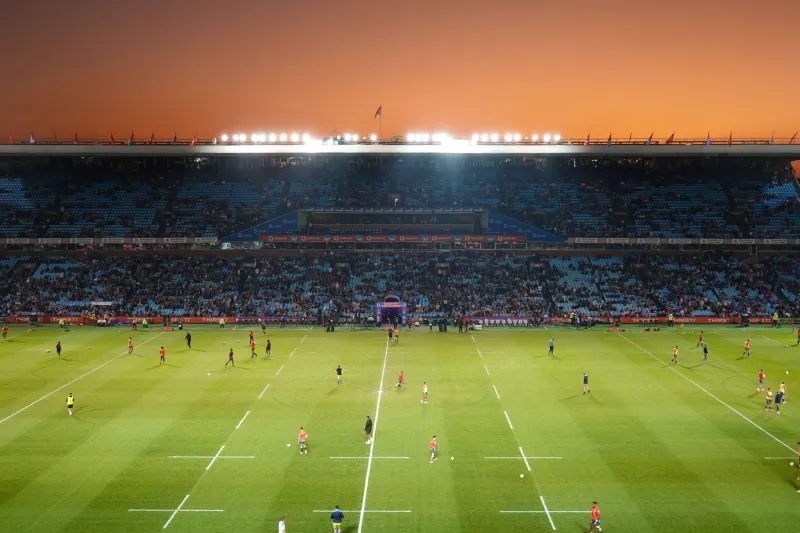
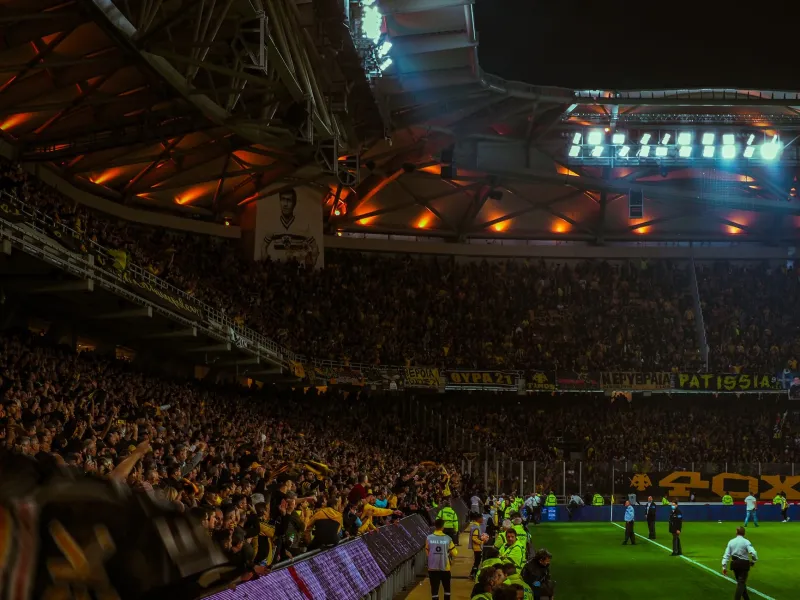
Rugby moves fast. Anyone who's stood pitchside at Murrayfield or the Aviva will tell you that. The gap between a scrum-half spotting a defensive drift and getting the ball wide before the cover arrives is measured in fractions of a second. Now imagine doing all of that — the reading, the calling, the executing — in your second language, under 80,000 decibels of noise, against a defence that knows exactly what you're trying to say.
That's the daily reality for a significant chunk of Six Nations players. And it's a dimension of international rugby that barely gets a mention in the post-match punditry.
The Vocabulary Problem Nobody Talks About
Every rugby team runs on language. Lineout codes, defensive patterns, attacking triggers, breakdown calls — they're all verbal. Coaches spend enormous amounts of time building what's essentially a private dialect, a shorthand that lets 15 players act as one organism without tipping off the opposition.
The problem is that rugby's tactical vocabulary isn't universal. It evolved differently in different countries, shaped by club traditions, coaching lineages, and national playing styles. A "crash ball" in English rugby doesn't always map cleanly onto its French equivalent. A lineout call system built around Welsh club rugby carries different assumptions than one constructed in an Italian academy. And when you start mixing players from different backgrounds — which Six Nations squads absolutely do — those gaps become real tactical risks.
France are perhaps the most interesting case study. Their squad regularly features players who've come through the Top 14 with its own dense internal argot, players who've spent time in English Premiership clubs, and increasingly, players from overseas backgrounds for whom French itself isn't a first language. The coaching ticket under Fabien Galthié has had to build communication systems that are simultaneously intuitive for French speakers and accessible to players still building fluency in the language.
When the Call Gets Lost
Speaking to multilingual players over the years, a few patterns emerge. The first is the "cognitive load" problem. When you're working in a second language, even if you're highly proficient, a small part of your processing capacity is always occupied with translation. In everyday conversation, that's barely noticeable. In a Test match, with a ball flying at your chest and a flanker arriving at pace, that fraction of a second can be the difference between a clean take and a knock-on.
One Italian international, speaking a few years back, described it memorably: "In training, I understand everything. In a match, when I'm tired and the crowd is loud, sometimes the word arrives but the meaning takes just a moment longer. That moment is expensive."
The second pattern is what you might call "code-switching under pressure." Players who are genuinely bilingual often revert to their stronger language in high-stress moments — which means a French-speaking player in an English-coached environment might instinctively call something in French when the pressure spikes, leaving teammates scrambling to decode it in real time.
The Coaching Side: Building Systems That Travel
Smart coaching staff have been quietly adapting to this for years. The most effective approach, from what coaches across the tournament have described, is to build tactical systems around visual and gestural cues wherever possible, using verbal calls as confirmation rather than primary instruction.
Scottish and Welsh club systems that draw on players from French-speaking regions have increasingly moved toward numbered or colour-coded systems that don't rely on idiomatic language. You don't need to understand a punchline if the number means the same thing in both languages.
There's also been a shift toward what some coaches describe as "anchor words" — simple, phonetically distinct terms that are easy to process even in fatigued, noisy conditions. The tactical complexity lives in the preparation and the rehearsal. What gets shouted on the pitch is a trigger, not an explanation.
Ireland's coaching evolution under Andy Farrell offers an interesting example. With players moving between Irish provinces that have their own deeply embedded calling systems, and with an increasing number of players who've come through academies in different countries, the Irish management have become notably disciplined about standardising language across the entire squad environment — from analysis sessions to training walk-throughs to match-day calls.
Does It Ever Become an Advantage?
Here's the counterintuitive bit: sometimes, yes.
Teams that operate in a language the opposition doesn't speak have a natural encryption layer built into their communication. French teams calling plays in rapid colloquial French — particularly with regional inflections that even fluent French speakers might struggle with — are effectively broadcasting on a frequency that most English, Welsh, or Scottish defenders can't tune into.
Italy have used this deliberately at times. Their lineout calling in Italian, drawing on regional dialects from different parts of the country, creates a layer of obfuscation that's genuinely difficult to crack in real time. It's not cheating — it's just geography doing tactical work.
The same applies to Welsh. Wales have historically benefited from having a significant number of Welsh-speaking players who can communicate in a language that, let's be honest, almost no opposition player or coaching analyst is going to intercept meaningfully. It's a small edge, but in a tournament decided by margins, small edges matter.
The Analyst's Headache
On the other side of the ledger, the rise of match analysis has made this whole area more complicated. Video analysts spend significant time trying to decode opposition calling systems — lip-reading, pattern recognition, timing analysis. When those calls are in a language the analyst doesn't speak fluently, the job gets harder. When they're in a regional dialect, it gets harder still.
Some analysis teams have started bringing in language consultants — not to teach coaches French or Italian, but specifically to help decode tactical communication patterns from opposition footage. It sounds almost absurdly niche, but at the level of Six Nations competition, where the margins between winning and losing a championship can come down to one lineout or one defensive read, it makes complete sense.
More Than Just Words
What all of this points to is something the broader rugby conversation tends to underestimate: the Six Nations isn't just a physical and tactical contest. It's a cognitive one. And language — the medium through which tactics live and breathe — is right at the heart of it.
The teams that manage this best aren't necessarily the ones with the most linguistically homogeneous squads. They're the ones that have thought hardest about how communication works under pressure, built systems that account for human processing limits, and turned what could be a vulnerability into something more interesting.
Next time you watch a Six Nations match and a lineout goes wrong, or a defensive call breaks down at a critical moment, it's worth considering: was that a skills failure, a tactical failure, or something lost — just for a fraction of a second — in translation?