Freeze Frame: The TMO Calls That Rewrote Six Nations History
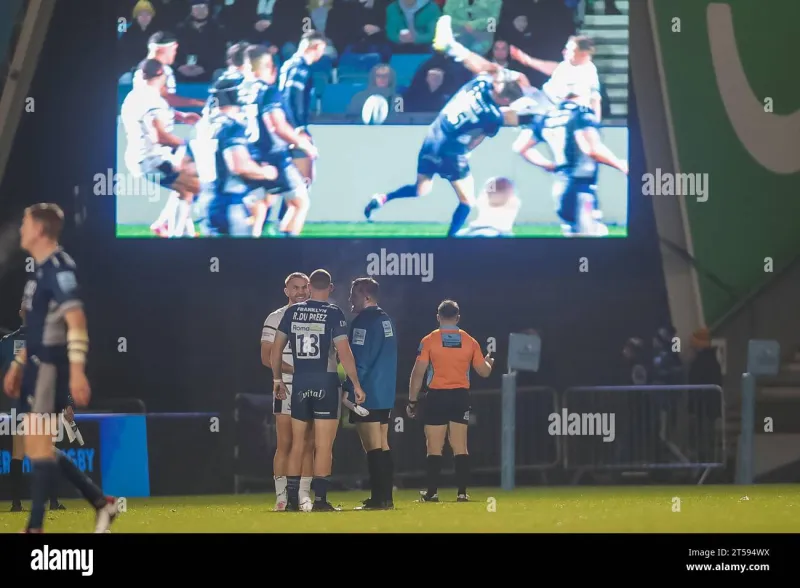
Photo: rugby referee TMO video review big screen stadium, via c8.alamy.com
There's a particular kind of silence in a rugby stadium that you don't get anywhere else. Not the silence of a missed penalty or a knock-on. This one is different — colder, more loaded. It descends the moment the referee raises a finger to his earpiece and mutters those words into the microphone: 'Checking with the TMO.'
In pubs across Wales, living rooms in Edinburgh, and packed terraces in Dublin, thousands of people suddenly become amateur video editors. Everyone has an opinion. Everyone is absolutely certain they're right. And then the big screen shows the replay — sometimes four or five times, from angles that didn't even exist twenty years ago — and somehow, everyone is still arguing.
That's the strange gift the Television Match Official has given Six Nations rugby. Clarity and controversy, arriving in the same package.
A Tool Born From Frustration
The TMO didn't appear overnight. It crept into the game gradually, born from years of coaches and fans screaming at television sets about decisions that seemed to hinge entirely on where the referee happened to be standing. The logic was sound enough: if we have the technology, why not use it? Why leave a championship-defining moment to a single pair of human eyes when a camera can tell us exactly what happened?
What nobody quite anticipated was that 'exactly what happened' would turn out to be surprisingly difficult to establish, even with all that footage. Grounding the ball over a try line while three bodies pile on top of you isn't a clean, well-lit event. It's chaos. And chaos, it turns out, doesn't become less chaotic just because you can watch it in slow motion.
Six Nations rugby — with its intensity, its physicality, and its compressed schedule where a single result can flip a title race — has provided some of the most dramatic TMO moments in the sport's history.
The Calls That Still Sting
Ask any Welsh supporter of a certain vintage about TMO decisions and you'll get an earful. The tournament has thrown up moments where the review process delivered a verdict that felt, to one side at least, like an act of outright injustice. A try given. A try taken away. A yellow card upgraded to red after a second look at a dangerous tackle. Each one rippling outward through the rest of the match, the rest of the season.
Ireland have felt it too. There's something uniquely deflating about watching your team celebrate — arms raised, crowd erupting — only for the moment to be suspended in amber while a man in a booth somewhere rewinds the tape. When the decision goes against you after all that, the deflation is almost physical. You can see it in the players' faces.
England, for all their resources and preparation, have been on both sides of contentious calls at Twickenham and away from home. A borderline forward pass in the build-up to a try. A tackle that might or might not have been high. The TMO doesn't care about reputations or rankings. It just watches and decides — or more accurately, it watches and advises, leaving the final call with the referee, which introduces its own layer of human judgement back into the process.
Does Technology Actually Deliver Justice?
Here's the honest answer: sometimes yes, sometimes it just gives us better evidence to disagree about.
There are clear-cut cases where the TMO has been an unambiguous force for good. Tries that looked doubtful in real time but were clearly grounded on review. Foul play that happened in a blind spot for the on-field officials but was caught on camera. In those moments, the system does exactly what it promised. It corrects errors that would otherwise stand.
But then there are the marginal calls — and Six Nations rugby is full of them. Was the ball held up? Did the winger's foot touch the touchline before he placed it down? Was that tackle shoulder or forearm? The camera gives you more information, but it doesn't always give you certainty. And when the TMO recommendation comes back and the referee makes a decision that still looks debatable from three different angles, you haven't eliminated the argument. You've just professionalised it.
Some coaches have spoken privately about the psychological effect on players. The wait itself — that minute or two while the review plays out — can disrupt momentum in ways that don't show up in any stats. A team that has just scored what they believe is a legitimate try, only to have it sent upstairs, can lose the emotional edge that was driving them. Rugby is a game of momentum, and momentum doesn't pause politely while technology deliberates.
The Referee's Impossible Position
Spare a thought, briefly, for the officials. The introduction of the TMO hasn't simplified their lives — it's complicated them. Now, alongside managing eighty minutes of elite physical contest, they're also expected to be fluent interpreters of camera angles, to understand what the review can and cannot definitively show, and to make a final call knowing that millions of people will immediately watch the replay on their phones.
The best referees have always had a kind of authority that goes beyond the rulebook — a presence that commands respect from players and keeps the game flowing. The TMO process can undermine that, not because the officials are doing anything wrong, but because it introduces visible uncertainty into moments that previously required decisive action. When a referee looks uncertain, the crowd senses it. The players sense it. The dynamic shifts.
What We've Gained, What We've Lost
It would be churlish to argue that the TMO has made the Six Nations worse. Genuinely incorrect decisions — the kind that used to simply stand because there was no mechanism to correct them — now get a second look. That matters. In a tournament where the title has been decided by a single point on multiple occasions, getting the big calls right is not a minor concern.
But there's something that existed in the pre-TMO era that's harder to quantify. A kind of finality. When the referee blew for a try, that was it. No review, no wait, no screen replays. The crowd reacted, the game moved on, and the disputed moment became part of the folklore rather than part of a review process. Fans argued about it in the pub for years, which was — let's be honest — part of the fun.
Now we argue about the review itself. Was it reviewed correctly? Should it have been reviewed at all? Did the TMO miss something? The technology hasn't ended the debate. It's just moved the goalposts.
The Next Chapter
As camera systems improve and AI-assisted officiating starts to appear in elite sport, the Six Nations will inevitably face new questions about how much automation it wants in its decision-making. Hawk-Eye-style ball-tracking, automated offside calls, real-time data feeds — all of it is coming, gradually.
Whether that brings us closer to definitive answers or simply generates a new category of arguments remains to be seen. Rugby has always been a game that resists clean resolution. It's messy and brutal and beautiful, and the moments that define it tend to be the ones nobody can quite agree on.
The TMO was supposed to change that. In some ways, it has. In others, it's just given us a bigger screen to argue in front of.