Tuned In, Filtered Out: The Sound Engineers Controlling What You Hear During the Six Nations
Settle into your sofa on a Six Nations Saturday, crack open something cold, and you'll probably think you're getting the full experience. The roar of Murrayfield, the crunch of a big hit at the Aviva, the referee's whistle cutting through the Cardiff air. It feels live. It feels raw. It feels real.
Except it isn't — not entirely. What you're actually hearing is a carefully constructed audio landscape, shaped in real time by a team of sound engineers sitting in a production truck parked somewhere outside the stadium. And the decisions they make, largely invisible to the average viewer, have a profound effect on how you experience the match, how dramatic it feels, and whose version of events you end up believing.
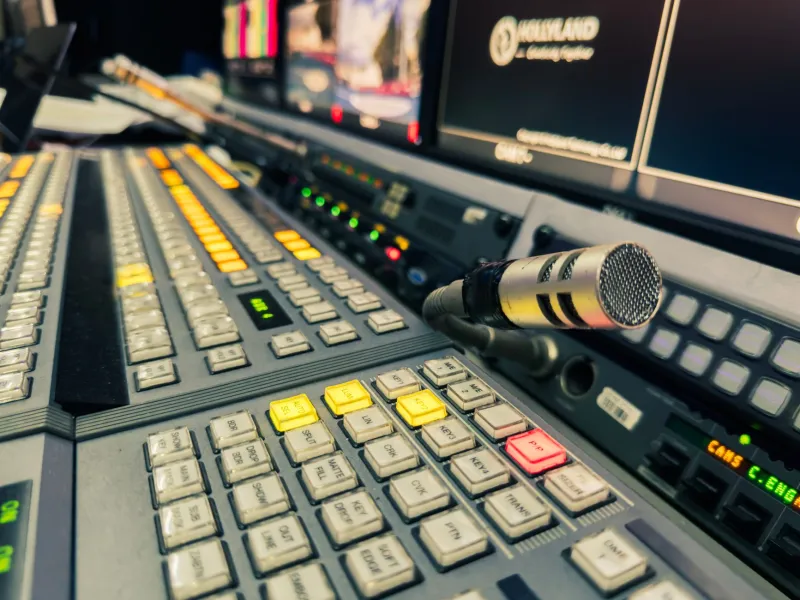
The Mixing Desk Nobody Talks About
Every major Six Nations broadcast runs through what's called a monitor mix — a live audio feed that engineers manipulate throughout the match. Multiple microphones are positioned around the ground: on the touchline, in the stands, near the tunnel, above the pitch on booms, and sometimes even embedded in the goalposts. Each of those feeds is a separate channel. The engineer's job is to decide, second by second, what you hear and at what volume.
It sounds technical because it is. But the implications go well beyond sound quality. When a scrum collapses near the England try line and you hear that guttural grunt of effort, that wasn't an accident. Someone turned that channel up. When the crowd noise swells just as a penalty is awarded, building the sense of outrage or jubilation, that too has often been nudged upward in the mix. The drama you feel isn't purely organic — it's partially engineered.
Broadcasters are fairly open about some of this when pressed. The goal, they'll tell you, is immersion. Home viewers should feel as close to the atmosphere as possible. Nobody's trying to deceive anyone. But there's a significant gap between the stated intention and the actual effect.
Swearing, Sledging, and the Mute Button
One of the most consistent — and least discussed — forms of audio manipulation in live sport is the real-time muting of player language. Rugby, for all its reputation as a gentleman's game, is absolutely filthy on the pitch. Any player or referee will tell you that. The verbal exchanges during a Six Nations match, particularly in the forwards, would make a sailor blush.
Broadcasters have systems in place to manage this. Touchline microphones can be pulled down in the mix or cut entirely when players are known to be within range. Referee microphones — which are broadcast on a slight delay — go through a separate filter that allows producers to mute or bleep anything that crosses a threshold. What you hear from the referee is curated. The full conversation, including the bits where players are giving the official an absolute earful, stays largely off your screen.
This isn't just about protecting the watershed, though that's part of it. It's also about protecting the image of the sport and, in some cases, protecting specific players and coaches from controversy. A touchline exchange that might go viral as a disciplinary matter simply doesn't make it to air. The game, as broadcast, is cleaner and more civil than the game as played.
Amplifying the Atmosphere
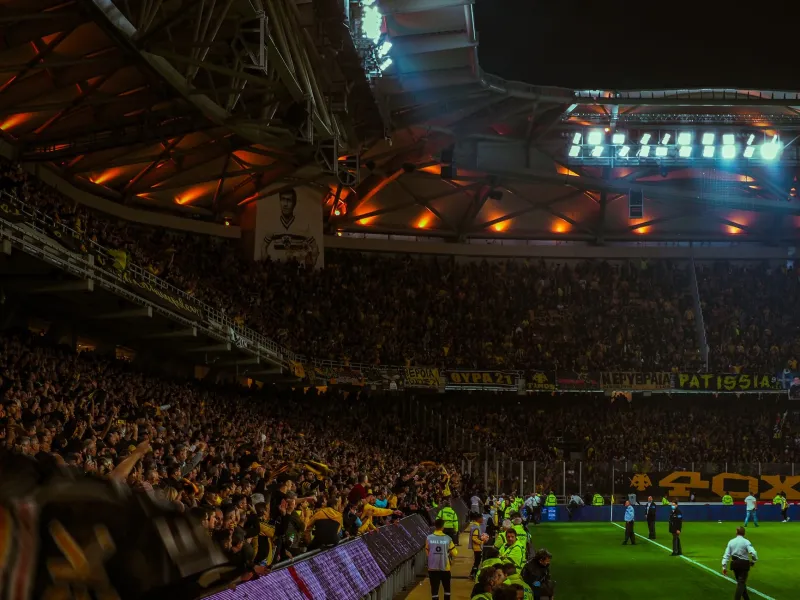
On the other end of the dial, crowd noise is frequently enhanced. Not fabricated — that's a different conversation, and one more associated with certain football broadcasts — but shaped. Stadium acoustics are notoriously inconsistent. Some grounds are bowls that trap noise beautifully; others are open and the sound dissipates quickly. Broadcasters compensate.
Ambient microphones positioned high in the stands can be brought up in the mix during key moments — a converted try, a contentious decision, the final minutes of a close match. The effect is to make the atmosphere feel more intense than a viewer watching from the same seat in the ground might actually experience. Sound, it turns out, is a significant part of what makes a match feel like an occasion.
This matters for Six Nations specifically because atmosphere is so central to the tournament's identity. The Millennium Stadium's retractable roof trapping noise, Twickenham's particular brand of anxious expectation, the Stade de France on a February evening — these are selling points. Broadcasters know that and lean into it. The audio team is, in a very real sense, part of the marketing operation.
What the Referee Really Sounds Like
Referee microphones deserve their own paragraph. The decision to broadcast referee communication was transformative for rugby — it gave viewers insight into decision-making that no other major sport offers at the same level. But what you hear is still a filtered version of proceedings.
Referees are briefed on their language. They know the mic is live. Most of them self-censor to a significant degree. What you lose is the texture of those conversations — the irritation, the frustration, the moments where a referee is clearly struggling to manage a situation and knows it. The broadcast version presents officials as calm, authoritative, and in control. The reality is sometimes considerably messier.
There's also the question of what happens between the referee and the TMO. Portions of those exchanges are not broadcast at all. Producers make real-time decisions about what to include, often based on clarity and relevance. What feels like a complete picture is frequently an edited one.
Does Any of This Actually Matter?
You could argue this is all fairly benign. Broadcasters have always shaped the presentation of live events. Camera angles, commentary framing, graphics, replays — all of it is a form of editorial control. Audio is just another tool in that kit.
But sound operates on a different level to visuals. We process audio more emotionally and less consciously than we do images. When a crowd roar is amplified, you don't think "that's been nudged up in the mix" — you feel the tension in your chest. When a player's touchline argument is cut before you can hear it, you don't notice the absence. The manipulation, such as it is, works precisely because it's invisible.
For Six Nations fans watching at home, this means the match you experience is always a constructed version of reality. Not dishonest, not malicious — but constructed nonetheless. The genuine sounds of the game: the actual volume of a half-time dressing room, the exact words exchanged between a captain and a referee after a contentious call, the raw noise of a stadium before the microphones get to it — those things remain largely private.
Next time you're watching a match and the atmosphere suddenly feels electric, it's worth asking: is that the ground, or is it the mixing desk? Chances are, it's a bit of both.